Keeping a reusable bottle genuinely clean

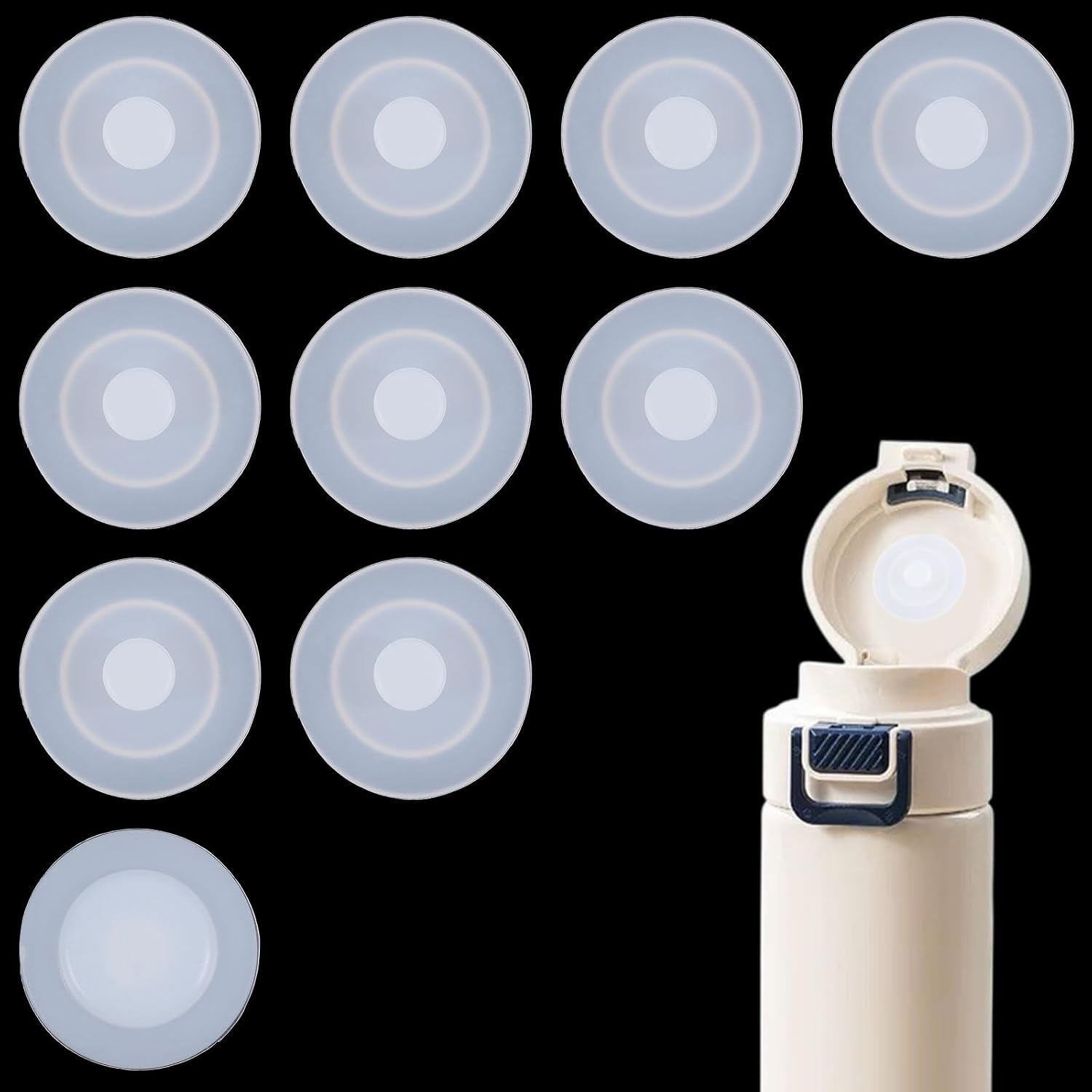
A bottle that smells has almost always been rinsed rather than cleaned, and the smell almost always comes from the lid rather than the body. Understanding where residue actually accumulates makes cleaning quicker as well as more effective, because you can concentrate on the parts that matter.
The lid holds more than the bottle does
Lids have threads, gaskets, spouts and straw ports — lots of small crevices, all of them wet, most of them never reached by a rinse. That is where biofilm forms.
Taking the lid apart, including removing the gasket, is the single most effective change to a cleaning routine. It takes seconds and it addresses where the problem actually is.
Rinsing is not cleaning
A rinse removes what is loose. Biofilm is a thin layer that adheres, and it needs mechanical action or heat to shift — water alone slides straight over it.
A brush, or a dishwasher, provides that. Filling with water and tipping it out does not, however often it is done.
A narrow neck needs a bottle brush
Sports bottles and insulated bottles usually have necks too small for a hand, so the walls never get touched. A long-handled brush is the only way to reach them.
For straws, a thin straw brush is a separate and necessary tool. A straw is a closed tube that is never cleaned by rinsing.
Drying upside down and open is what prevents regrowth
A bottle capped while damp is a sealed, dark, wet container, which is ideal for growth. This is the most common reason a properly washed bottle still smells.
Store bottles with the lid off and inverted so water drains and air circulates. This matters more than what you clean them with.
For persistent smells: bicarbonate or dilute vinegar
A soak in warm water with bicarbonate of soda, or with dilute white vinegar, neutralises most residual odours. Leave it for a few hours, then wash and rinse thoroughly.
Neither is harsh, both are cheap, and between them they handle almost every stubborn case.
Check what is dishwasher safe before assuming
Many bottle bodies are, and many lids are not, particularly insulated bodies and lids with electronics or complex seals. High heat can damage a vacuum seal.
The listing states it. Where a body is not dishwasher safe, hand washing with a brush achieves the same result with a little more effort.
Parts worth replacing
Where a gasket has perished or a stopper has gone missing, replacing the small part is far cheaper than replacing the bottle. On our own shelf that range currently runs from $4.49 for the GentleJet 3-Pack Reusable 5 Gallon Water Jug Caps – Blue Silicone, Non-Spill up to $6.99 for the Boao 5 Sets Silicone Water Bottle Carriers with Keychain Clips, Black, Silver, Yellow, Purple, Green.
Each of these sits in Bottle Accessories; there are 21 products in that group today. The figures below are the charged prices, and nothing further is added at payment.
- GentleJet 3-Pack Reusable 5 Gallon Water Jug Caps – Blue Silicone, Non-Spill — $4.49
- PurYupearl 6 Pcs Multicolor Silicone Water Bottle Buckle with Carabiner Clip — $4.99
- Chill Oasis Water Bottle Caps for Cirkul Lids – 2 Pack, White — $4.99
- Iconikal 2-Pack Water Bottle Holder with Rubber Grip & Aluminum Carabiner — $5.69
- PandaEar 6-Pack Silicone Water Bottle Caps for Kids & Toddlers – No-Spill Spout Adapter — $6.98
- Boao 5 Sets Silicone Water Bottle Carriers with Keychain Clips, Black, Silver, Yellow, Purple, Green — $6.99
Related reading
Two other pieces on this site cover ground next to this one. Squeeze bottles fail at the tip, and tip choice is the decision that matters most. And on a related note, cap fit is a measurement, not a brand match, and the measurement takes ten seconds.
- Squeeze bottles for a griddle: choosing ones that do not clog
- Measuring a water jug neck so the replacement cap actually fits
The parts people never clean
The gasket groove in the lid is first. Removing the seal reveals a channel that collects residue and is completely untouched by rinsing, and it is the single most common source of a persistent smell.
Straws are second. A straw is a closed tube, and water passing through it does not clean the walls. Without a dedicated thin brush a straw is effectively never cleaned, however often the bottle is rinsed.
What to do about mould you can see
Visible dark spots in a gasket or straw mean growth has established in a place a rinse cannot reach. Soaking in a dilute vinegar or bicarbonate solution and then brushing thoroughly clears most cases.
If a gasket remains discoloured after a proper clean, replace it. Seals are inexpensive and consumable, and a permanently stained one has growth within the material rather than on it.
A routine that works
Take the lid apart, brush the body and any straw, wash the gasket separately, rinse well, and dry everything inverted and open. Do that a couple of times a week and bottles simply do not develop smells.
Parts go out from Los Angeles, CA at a flat $3.95, free past $29. Unused returns are accepted for 30 days. Write to [email protected].